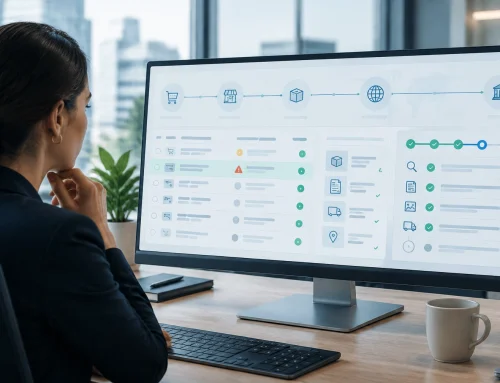

The shortlist is ready. The spreadsheet is open. Each demo shows a unified API, multiple provider connections and smart routing, so how can a merchant tell which platform will actually fit its payment operation?
The answer is to assess the whole system, not just the software layer. A capable orchestration layer connected to unsuitable or unreliable providers can simply organize the same limitations more neatly. The complete payment orchestration guide explains the broader model; this article focuses on how to evaluate a provider. For clarity on the roles involved, see how gateways, processors, PSPs and acquirers differ.
Key takeaways
- Write down business and technical requirements before comparing vendors.
- Evaluate the depth, availability and maintenance of provider connections, not just the number listed.
- Treat token portability, settlement responsibility, data access and exit terms as due-diligence issues.
- Compare total cost of ownership, including integration and ongoing operations.
- Use a weighted scorecard, but make critical requirements pass/fail gates rather than letting a high average conceal a serious gap.
What is being evaluated?
A payment orchestration platform is more than an API. Evaluate four connected components:
- Control layer: routing rules, transaction visibility and operational controls.
- Provider network: the gateways, PSPs, acquirers and payment-method providers available for the merchant’s markets and profile.
- Integration model: the APIs, hosted checkout options, documentation and maintenance work required.
- Support relationship: onboarding, issue escalation and help managing provider changes.
The gateway-versus-processor comparison also helps clarify which responsibilities sit with the orchestration provider and which remain with the underlying payment partners.
1. Define requirements before vendor demos
Create a short requirements brief. Specify target markets and currencies, required card and local or alternative payment methods, expected transaction patterns, business category, settlement needs and current providers. Note recurring payments, authentication requirements and the payment metrics the team needs to monitor.
Also document internal engineering and finance capacity. A platform may offer extensive functionality, but that does not mean the merchant has the people or processes to implement and manage it.
2. Verify provider connectivity, not just the provider count
Ask for a current connector matrix that shows what each connection supports for the merchant’s actual markets, currencies, methods and transaction types. A provider appearing on a list does not mean it is available to every merchant. Approval is determined by the relevant provider, based on its underwriting requirements and the merchant’s profile.
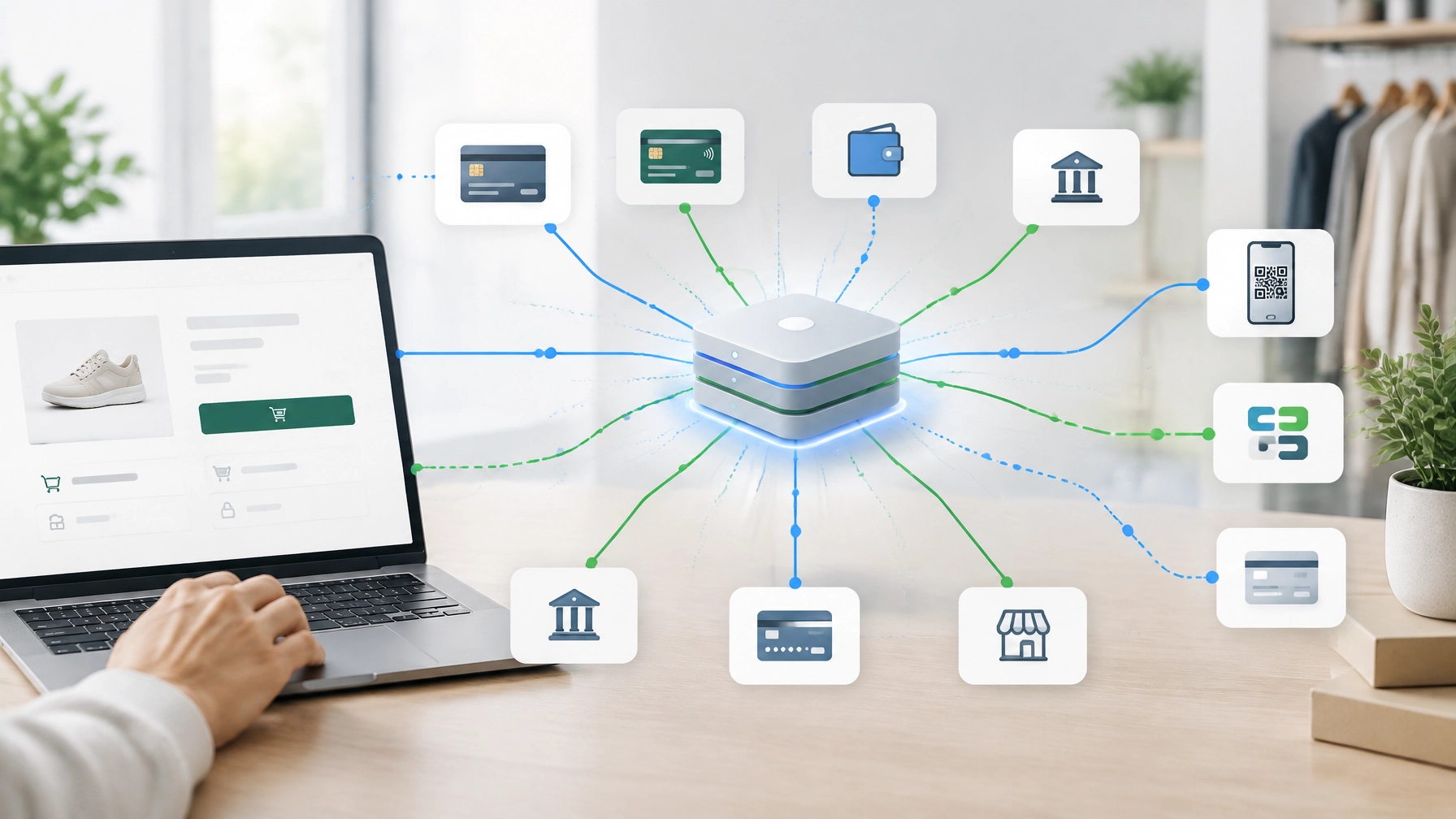
Ask whether each integration is direct or provided through another aggregator; how it is tested and maintained; how provider API changes are handled; and what work is involved in adding a new connection. Request a walkthrough of an actual connector’s supported capabilities and limitations, not only a list of logos.
3. Assess routing controls and integration effort
For the control layer, check whether rules can reflect relevant transaction details and provider availability. Can the team understand why a route was selected, audit past decisions, test changes and roll back a rule safely? The mechanics of smart payment routing and provider failover deserve separate technical evaluation; here, the buying question is whether the vendor gives the merchant suitable visibility and control.
Compare API, hosted payment page and hybrid options. Review documentation, sandbox quality and the path to a first test transaction. Estimate what engineers will need to build, monitor and maintain after launch, not only the initial integration.
4. Check tokens, data and operational visibility
Ask who controls the token vault, which credentials can be used across providers, and what happens to stored payment credentials if the relationship ends. “Tokenization supported” is not enough: portability depends on the token type, provider arrangements and technical constraints. Get the answer in writing and understand any migration or re-tokenization process.
Then test reporting with practical tasks. Can the finance team reconcile provider settlements? Can operations inspect each attempt, investigate failures, monitor connections and trace refunds or disputes? A consolidated dashboard is useful only if it preserves the detail needed to resolve real issues.
5. Examine onboarding, support and total cost
Clarify whether support is provided by a named contact or a general ticket queue, how technical questions are handled during integration, and who coordinates issues involving a connected provider. Ask what support is included and what carries an additional fee; do not assume response commitments that are not documented in the contract.
Build a three-year cost comparison where possible. The cheapest platform fee may not produce the lowest overall cost.
| Cost area | Include in the estimate |
|---|---|
| Platform and processing | Subscription or platform charges, per-transaction or per-attempt fees, minimums and volume tiers |
| Payment partners | Acquiring and PSP fees, cross-border charges, FX spreads and settlement-related costs |
| Implementation | Integration, certification, provider setup and migration work |
| Ongoing operations | Engineering maintenance, reconciliation, support tiers and reporting add-ons |
| Changes and exit | New connections, custom work, data export, token migration and termination assistance |

6. Score candidates with an adaptable framework
Score each category from 1 to 5, then multiply by its weight. The weights below are a starting point, not a universal answer. Adapt them to the merchant’s requirements. Treat essential security, approval, token and exit requirements as gates: a high overall score should not cancel a critical failure.
| Evaluation category | Example weight |
|---|---|
| Provider connectivity and market fit | 20% |
| Routing visibility and control | 15% |
| Integration and operational fit | 15% |
| Token and data portability | 15% |
| Total cost of ownership | 15% |
| Support and onboarding | 10% |
| Security, compliance and contract fit | 10% |
| Total | 100% |
Record evidence beside every score: connector documentation, contract language, sandbox tests or written vendor responses. “Shown in a demo” is not the same as tested or contractually agreed.
Red flags and questions that expose them
| Red flag | What to ask or verify |
|---|---|
| Guaranteed approval or authorization improvements | What conditions apply, and what evidence supports the claim? |
| A vague provider list | Which connections support the merchant’s markets, methods and business profile? |
| No usable sandbox or test plan | How can the team validate the full transaction and operational flow before launch? |
| Unexplained fees | Which events are charged, and which costs are passed through by payment partners? |
| No clear exit provisions | How are data and credentials exported, and what assistance and fees apply? |
| Unclear settlement responsibility | Which contracting entity manages the merchant’s settlement arrangement and related terms? |
Due-diligence questions for each provider
Use the same questions for every shortlisted platform:
- Which connections support our specific markets, currencies and payment methods?
- Are those connections direct or through another intermediary?
- What approval must we obtain from the connected providers?
- How are connector changes tested, maintained and communicated?
- Can we inspect and audit individual routing decisions?
- How are rule changes tested and reversed?
- Which integration model fits our checkout, and what will our team maintain?
- Who controls the token vault, and what can be migrated?
- Can we see sample attempt-level and reconciliation reports?
- Who manages settlement, and which entity holds that responsibility?
- What onboarding and ongoing technical support are included?
- What are the complete recurring, pass-through and exit costs?
- What data can we export at termination, in what format and on what terms?
Plan the exit before signing
A platform may simplify provider management while becoming another dependency. Review termination notice periods, data export rights, token migration options, post-termination access and fees. If stored credentials cannot move directly, understand the practical fallback, including whether re-tokenization or customer action may be required. The exit plan belongs in the evaluation, not in a future emergency.
Extra diligence for high-risk or regulated businesses
Businesses in regulated verticals should confirm that the connected providers review and support their specific business model, markets and transaction profile. Examine underwriting requirements, settlement terms and ongoing monitoring expectations before relying on a connection. For more on the merchant-side considerations, see Payvea’s information on high-risk merchant accounts and the dedicated guide to high-risk and regulated payment requirements.
Illustrative example: an international subscription merchant
Imagine a fictional subscription business operating in several markets. Its shortlist includes one platform with a broad provider list and another with fewer connections but clearer support for its target currencies, recurring payments and token migration.
Using its requirements brief, the merchant verifies which providers would actually consider its business, tests the relevant recurring-payment flow and reviews sample reconciliation data. The first platform’s headline coverage proves less relevant than expected; the second better matches the required markets and offers a clearer exit process. The merchant should still compare full costs and validate implementation effort before deciding. The point is not that one type of provider is always better. It is that evidence tied to business requirements beats demo breadth.
Frequently asked questions
What is a payment orchestration platform?
It is a technology layer that connects and coordinates payment routes and provider relationships. This article focuses on evaluating one, rather than explaining the architecture in depth.
How much does a payment orchestration platform cost?
Pricing depends on the commercial model and connected services. Compare platform fees with provider charges, integration, operations, FX, support and exit costs.
Is an orchestration platform the same as a payment gateway?
No. A gateway is the technical connection to payment services; orchestration coordinates multiple connections and related decisions. Some offerings combine functions. See the gateway and payment-stack comparison.
Do I need a payment orchestration platform?
It may be worth evaluating when multiple providers, markets, methods or operational needs make separate integrations difficult to manage. The benefits should justify the added layer and cost.
What should I look for in a payment orchestration provider?
Start with provider fit and connectivity depth, then assess control, integration effort, portability, operations, support, cost and exit terms.
Can it work with an existing acquirer?
Potentially, if a supported connection is compatible with the merchant’s setup. Confirm technical requirements and provider approval.
How long does integration take?
There is no universal timeline. Scope, integration model, testing, provider onboarding and the merchant’s engineering capacity all affect it. Ask for a plan based on your requirements.
Can I switch platforms later?
Possibly, but the work depends on contract terms, data access, token portability, provider integrations and migration support. Evaluate those conditions before signing.
Choose the whole payment system, not the demo
A sound decision comes from matching verified provider connections, practical controls, integration effort, operational support and full lifecycle cost to the merchant’s written requirements. A polished orchestration layer is not enough if the routes behind it, or the migration path out, do not meet the business’s needs.
Payvea provides unified payment gateway infrastructure connecting businesses to supported acquiring, PSP and alternative-payment partners through one integration. Its single-API and hosted integration options, routing and failover logic, reporting and technical onboarding support can be assessed against the same framework. Access to 250+ payment methods and 100+ currencies is through supported partners, subject to provider capabilities, merchant approval and availability in supported markets. Payvea is a payment technology provider, not a bank or direct acquirer, and does not independently approve merchant accounts.
To compare your requirements with a supported setup, Discuss Your Gateway Requirements.